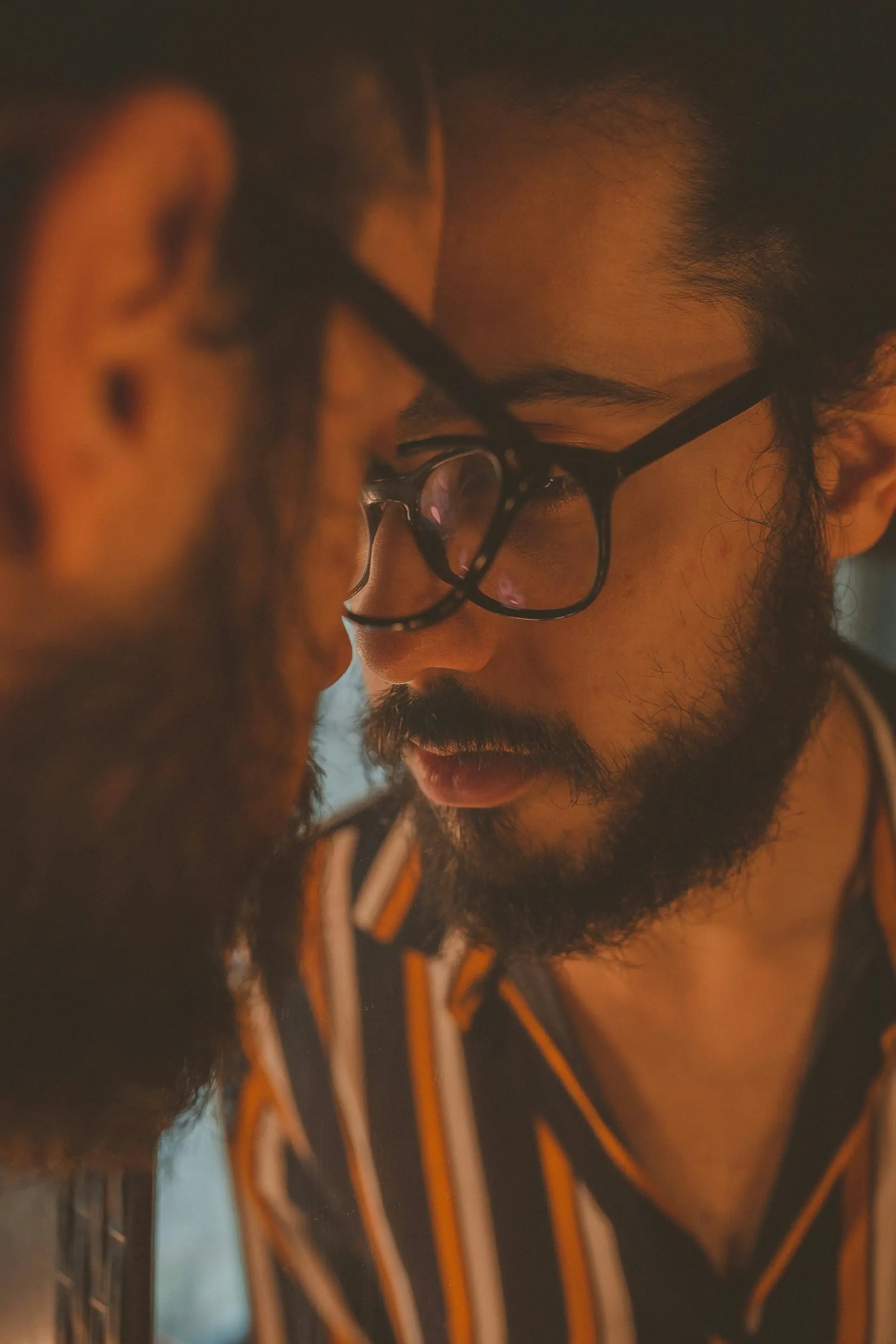
“It’s kind of like when you overload a computer, and it freezes or crashes.”
I always felt ‘off’ when I was younger, like I couldn’t seem to ever truly fit in anywhere. Even when I was with groups of close friends, I felt like I didn’t belong.
In terms of symptoms, BPD is all about emotional dysregulation and rapid/frequent mood swings. Throughout the day I can feel normal and then have a bad thought, or see something that reminds me of something I’m struggling with, or even in a lot of cases, my brain will connect completely unrelated events back to topics that make me overwhelmed and it can become an instant shift to an incredibly heavy feeling of anxiety and deep depression that can last for hours or days. And because people with BPD only experience their emotions at maximum strength, having one or two swings in a day can not only be exhausting but also very dangerous if I can’t break myself out of the spiral or get help
For symptoms I deal with more intensely, it’d definitely be the negative self conscience and the anger towards myself that the quiet type of BPD causes.
Because I’m the quiet type, I’m often seen as high functioning and generally pretty normal, but that’s because I force myself to act that way and all of the intense emotional reactions that people with BPD are known for are pointed inwards instead of outward, so most people never even realize I’m upset. Oftentimes people confuse it with bipolar, but bipolar is thought to be genetic and also has periods of mania. In most cases of BPD, mania isn’t a factor.
I learned through childhood that I couldn’t be emotional, otherwise I’d be yelled at or punished in one way or another, so I learned to hide it all inside my own head which nowadays has formed into an incredibly negative internal voice that’s very hard to avoid listening to.
I put a lot of blame on myself for almost everything, and that blame becomes more fuel to that negative, self conscious fire, especially at times where I’m completely alone with my thoughts. That’s when it comes out in force and that’s when I can have very bad swings, or even relapse back into self harm or other unhealthy coping mechanisms when my brain becomes too overwhelmed with the emotions. It’s kind of like when you overload a computer, and it freezes or crashes.
It has severely impacted my relationships for sure, but I’ve been able to use work as an escape and a way to be social, so that’s helped. For school it’s hard to say if it was more my BPD or my ADD that was really the cause the problems, but I think socially in school BPD definitely had an effect.
I was diagnosed about four or five years ago, but at the time I didn’t look further into it. I just saw it as another mental health problem to be added onto the rest, and just couldn’t focus on it. But in the past year I’ve been trying to learn more about it all myself, and it’s been very helpful and has allowed me to understand my behaviors and cycles and triggers far better than I would have if I had just never looked into anything. I didn’t like that I had yet another diagnosis to deal with originally, but over time and as I’ve learned more about it, I wish I would’ve known earlier in my life because it helps explain a lot of things about myself that I could never really explain before.
Thankfully both my therapist and my psychiatrist have been pretty understanding and helpful and have given me resources and coping skills that help in day to day struggles. They have also referred me to some DBT therapy, which is specifically designed around disorders like BPD, and whilst I haven’t started it yet, I am looking forward to it.
I’m becoming more open with my BPD diagnosis slowly. It’s hard because I have a genuine fear from trauma of people seeing me as crazy, but I do find it helpful to talk about with others so I can get other perspectives outside of my own. But it’s harder to try and hide it these days. Most people can tell something’s wrong, because they can see it in my face or on my arms, and while oftentimes I’d love to tell them exactly what is wrong and what’s happening to me, I don’t, because I know it would drive them away or make them see me as unstable.
I think it’s important for people to learn more about themselves to help them better understand how to handle the problems they have. Me learning about BPD has helped me to not only feel less alone, but it’s also helped me learn ways of handling my wild emotional swings a bit better than before.
I wish there were more positive representations for BPD in the media because it’s often portrayed as being crazy or clingy or violent, when really every person with BPD deals with it in their own unique way and it’s tough to worry about people thinking I’m crazy when they find out I have BPD because of movies with crazy BPD ex-girlfriends.
There definitely is a stigma, and sadly oftentimes many men don’t get diagnosed with BPD because there’s a medical stigma that men are just depressed or antisocial, and so they don’t get the help they need with proper treatment and the problem never gets solved.
I’ve had BPD since I was very young but no psychiatrist ever even entertained the idea until a few years ago, and I consider myself lucky. Because the illness is only seen as a primarily female issue, all of the resources and videos out there are primarily from a female perspective- which is in no way bad- but it doesn’t solve all the issues that a man’s perspective would do for a guy looking for some guidance. Each gender deals with their own valid issues, and because of that they need to be addressed in their own ways when it comes to mental illness because there’s no blanket cure that will work for everyone.
I also consider myself lucky for being a quiet borderline as a man, because all the aggressive and emotional outbursts that borderlines are known for are all internalized. I do believe that in modern society I would be looked at much differently if all of it was externalized, like the other three types often are.
I think what a lot of people get wrong about people with BPD is that they are automatically malicious or manipulative if they have the disorder, when really it’s just emotional scars presenting themselves in weird ways that even they themselves don’t understand.
My advice to anyone who has a loved one with BPD is to do your research. There are plenty of studies and videos all over the internet that are fantastic resources to learn more, because that person will need your help navigating certain struggles and spirals and if you know how to help, then they can feel a certain sense of security, which a lot BPD people feel like they lack.
With the outbursts and anger, it’s always important to keep in mind what someone’s mind with BPD is doing to them when they are having the outburst before reacting. Most often what’s said or done isn’t done while in a clear state of mind, and often are immediately regretted afterwards once they can see a different perspective. But they need your help to see it.
I think there needs to be more understanding from people without it, but I also feel that’s something that’s necessary for most mental health conditions. The world needs more empathy.