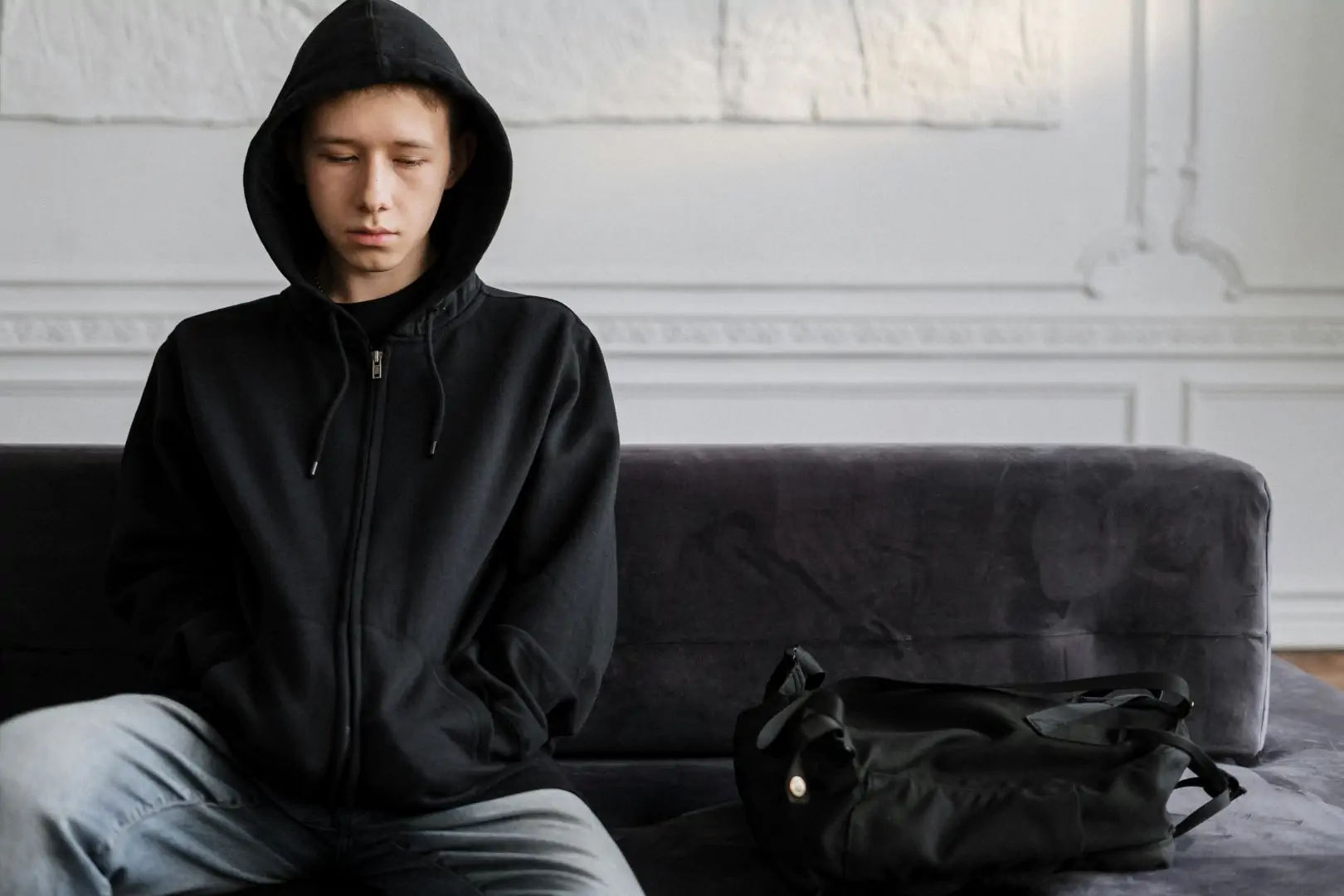
“Dissociative Identity Disorder doesn’t have to be a lonely, shattering, hopeless diagnosis.”
For most of my childhood, I lived an excruciatingly abusive, dysfunctional, neglectful, overwhelming and isolating life. However, I didn’t recognize or remember most of the traumas until over 22 years later. I was homeschooled, attended church regularly, and had very few friends. I was often called the, “space cadet,” “clumsy one,” and “extremely- mature one” for my age.
My biological (as I’m going to call them) moved from state to state every few months running away from CPS and law enforcement. Most outsiders, overall, viewed my ‘jo-smhoose’ as decent enough people. But they were far from anything worthy.
Until I was 22 years old, I had minimal recollection of all the horrific trauma I had endured. In 2016, more extremely traumatic events occurred as I became the sole custodian of several of my siblings. Soon, my body, mind, and memory were flooded with fragmented memories of some of the horrific abuse that occurred in my childhood. These memories didn’t feel like my own. I felt sure they were someone else’s.
The fragmentation of these memories made me feel like a train had hit me, going off the tracks at 150 mph. My relationships with my siblings changed dramatically; my marriage of six years broke down, and I became an instant ‘parental figure’ overnight. I felt devastated, scared, and fearful for mine and my siblings’ lives.
Two years into my siblings living with me, I began to experience extreme trauma symptoms. I had no idea what was happening to my mind or body. I believed I was crazy, broken, and shattered to my core. I experienced horrific nightmares, flashbacks, body memories, memory loss, time loss, detachment from my surroundings, and more. I remember feeling utterly disconnected from my surroundings and body. I couldn’t understand what was wrong with me. I self-harmed from the ages of 12-16. Then continued with that survival coping skill at 24.
I felt highly suicidal and soon became unable to function at home, work or school. Because of my mental health deterioration, I granted who I now proudly call my mom and dad custodianship of my siblings while I attempted to receive treatment. Throughout the next 3-4 years, I attempted suicide multiple times. A severe life-threatening attempt landed me in the ICU for a week. I then went to an out-of-state residential mental health facility to receive intensive trauma treatment.
I was discharged from that program nine months later, and again, I was psychiatrically hospitalized from intense suicidal ideation and suicide attempts more times than I can remember. The darkness of my suicidal ideation hovered over me like a black cloud of doom. I’d attempt to take my life and yet have no recollection of the events leading up to it or after. My experiences within the psychiatric hospital were abusive and, quite frankly, made my dissociative symptoms worse. Doctors told me I was dissociating for ‘attention’ and that I, “didn’t want to get better.”
My DID symptoms sometimes feel debilitating. I still experience rapid switching. Some days, this is worse than others, especially around trauma anniversary dates. On other days, I have no idea why I have switched so much. On a good day, I can account for what I have accomplished, if I’ve eaten and/or taken my meds, and/or if I completed simple daily tasks.
Without taking my medications properly, I suffer from chronic debilitating nightmares, sleeping body paralysis, body memories, and worse flashbacks than normal. These can occur sometimes multiple times daily or weekly, depending on if my system has been triggered by an event, sight, smell, or noise. When traumatic flashbacks and body memories occur, my mood can dramatically change from joyful, happy, and carefree to instantly angry, resentful, and fearful.
Coping with time loss, memory loss of daily activities, and lack of awareness of conversations have been some of the most challenging symptoms to learn to live with. My lack of memory causes me to feel helpless and out of control. I sometimes feel frustrated, unable to remember the conversation I was just having or what I had been discussing with someone.
My mind sometimes feels like a house is on fire, the rooms and the walls are all melting, and the fire extinguishers are nowhere to be seen. With several of my separate different parts needing comforting, effective internal communication, and/or self-compassion, my head can feel loud and intense. Acute ‘switching’ headaches occur chronically. When my brain is ‘on fire’, most of my parts are haphazardly running in different directions for their dear life, and the protectors are left to pick up the buckets of ashes. It has taken tons of hard work, but in my internal world, there are now fire extinguishers to put out these blazing fires.
Sometimes, my switches are subtle, and outsiders don’t know I’ve switched. However, when more chronic dramatic switches occur, my language changes from, “I” to “we,” and my body language changes. My body then instantly feels like it’s been plunged into freezing cold water in the middle of the Arctic Ocean, and there’s no life vest to help pull me out.
There are times when I am still unaware of my own switching. This occurs when I switch to a part I understand less, or don’t communicate well within the system. When I switch back to another part or the host, I feel discombobulated and detached, and my body feels unreal.
Switching between parts is exhausting. Sometimes, I can put the puzzle together that I have switched from one part to another part by reading through the ‘We Are Us’ scrapbook journal parts we all keep. This is a safe place where each part can communicate our feelings, triggers, questions, roles, notes to each other, and anything else that is felt necessary to communicate to each other. We go through about two four-inch, three-ring binders a year.
I’ve journalled ever since I was an adolescent. Journalling became our system’s escape from the unpredictable reality we lived in daily. Little did we know that our ‘jo-shmoos’ calling our handwriting “sloppy” and saying that that we, “obviously just didn’t care” as a child was our parts switching back then. This journaling scrapbook has helped me understand my parts’ different roles and personalities. Without this it often feels like a 45,000-piece puzzle that slowly and delicately gets together.
We are a system of over 20+ parts. There are probably even more parts that I don’t have an awareness about yet. They have saved us repeatedly. I believe that DID is our hidden superpower. We have littles, caretakers, protectors, internal world keepers, persecutors, and more. Most of my parts hold extensive trauma and require a lot of attention, empathy, kindness, and understanding. Yet, some days our head is so chaotic and loud that we just feel like throwing in the towel and saying “F**** this”! or “Shut up!”.
However, in the end, not communicating and becoming hostile only creates more chaos, stress, and internal fires than necessary in our system and with our parts. Through a lot of therapy work and internal communication we have learned that a gentler approach works much better. As a system we call ourselves ‘The Freedom System’.
In our internal world, we have what we call ‘The Freedom Room’. In here, each part has a seat, three buttons, and a microphone. The rules in this room are: This room is safe. There is to be no threats, or yelling. Each part’s voice matters. And that we can approach conflict we compassion, empathy, and understanding.
In this room, there is a whiteboard in which important announcements are put up- like if we have an important appointment or meeting a certain part needs to attend. In this room, we vote on important events happening in our lives and can use this time to better understand each other. The three buttons say, 1-yes, 2- no, 3- maybe. And the microphone can be turned on and off by the administrator of the system. In this room, we learn how to have teamwork and use collaboration. We value different opinions and can use the whiteboard to come to a majority rules consensus.
Outside of this room, each part has its own room. They can decorate however they please. Some parts choose to paint their walls black with sparkles, while others choose red, or paint unicorns on the ceiling. In their room, they have beds, desks, games, books, journals, or anything else you can imagine. It’s not uncommon for particular parts to dress a certain way when we switch out.
In order to explain our system, I will now describe the different parts.
I (the host, age 30) love cooking, baking, puzzling, painting, singing, listening to acoustic music, journalling, and anything that adds excitement to my life. I love writing and hope to publish a memoir about my traumatic childhood. I primarily deal with day-to-day activities. I take care of our ADLs, go to appointments and am highly competitive naturally. I’m also a protector part. However, I can get really blendy (dissociative) and often switch from part to part when triggered. I feel these parts rescue me from what is unbearable trauma and pain. I become easily triggered by sirens, loud, unexpected noises, images of the ‘jo-shmoos’, traumatic flashbacks, body memories, and nightmares.
I advocate for ending mental health stigmas and hope to start a non-profit in my state someday. I love learning and continually seek opportunities to strengthen my learning experiences. I aim to inspire healing, hope, honesty, and harmony about the tough stigmas and biases that come with a DID diagnosis.
Our system’s main protector parts are Jillian, Gretchen, and Percy. They help us function daily, mainly when we become triggered. Until this past year, our system held no internal communication and healthy coping skills.
However, we now live in a new, supportive living environment and are in therapy with a psychologist who specializes in dissociative disorders which has been healing for all of us. We have all begun to learn and use the coping skills and support available despite our daily struggles. We have started to work as a family so to speak. There are some parts we have begun to have some co-consciousness with which just means more than one part has awareness of time, conversations, etc at a time.
Jillian is 17 and her primary struggles are suicidal ideations, flashbacks, intrusive thoughts, impulsivity, memory loss and self-sabotage. We tend to hold onto the deep internal pain, panic, and traumatic experiences we have survived and still recover from. We struggle to let others in and don’t trust others at all. We often feel unsafe while we experience flashbacks, body memories, and nightmares. While (the host) is right-handed, we are left-handed.
Our coping skills are primarily drawing, painting, and talking with our support team. Our favorite music artists are NF (very loud), and our playlist on our phone is ‘Angry Jams’. We experience very intense emotions exceptionally quickly. We feel more comfortable in the darkness and, for most of our life feel misunderstood, alone, and hopeless. However, we don’t feel as alone now that we live in a safer home.
Gretchen is somewhere between 16 and 18. We feel the darkness devouring our souls. It eats at us daily. The bad memories corrode our minds. It’s all-consuming. The monsters of our past belch with screeching noises as our eyelids close, but even in our sleep, we find no relief. Often, the only comfort we feel is through self-harming (even if just for a few minutes). The thought of death usually hovers over us, but we fight it daily. We live with the guilt and shame like it’s a giant hole in our stomach.
We attempt to escape and run from our pain through writing, scrapbooking, and playing around with make-up. The problem is we sometimes feel like something is innately wrong with us. Our mind is a warzone, and we’re our own worst enemy. Impulsivity runs through our veins like the blood running through our body.
We’re now very close with Jillian (it hasn’t always been this way). Trauma anniversaries haunt our mind, body, and soul. Yet, it is our pain and trauma that we have survived, which unite us. We both stand up for injustice and try to not run away when things are hard. Music is therapy for the soul. It speaks to us more than the words of people. We listen to songs with intense, extremely sad, and heartfelt lyrics. We feel responsible for others in the system. We try to help our other parts not feel so alone in the darkness as we understand how it feels to live there. We’ve begun to have better communication with the primary host.
Shadow is 13. He wants to be a 22 year old male; however, he is stuck in a female body. Our system considers him to be the persecutor part. He identifies from our ‘jo-shmoos’ beliefs and behaviors. From what we are aware of, he is our only male alter. Most parts struggle to communicate and understand him because of the steel walls he has built around himself. He has also survived many horrific traumas.
However, he typically refuses to attend therapy, etc. He attempts to bully the other parts into self-harming, bringing fear and chaos into our system. He lives in the past and has no recollection and comprehension of past and current times. He is typically who starts ‘the fires’ in our internal world. However, he has begun to use a fire extinguisher to put out these fires himself.
When we switch from Shadow to another part, we typically have zero memory of what he did or said. Both the host, Gretchen, and Jillian have attempted to open the doors of communication with him. However, he doesn’t let any other parts in. He copes with listening to Three Doors Grace, Linkin Park, Green Day, Dax, NF, and other similar music artists. He is a fantastic poet and music writer.
Gina is 16 and rarely switches out of the inner world. However, she provides much comfort to caretaker parts (Izzy and Britt) and Percy. When experiencing flashbacks, she often feels trapped, alone, and ashamed. She hopes to one day combine all her poems into published books for other systems suffering in the darkness of DID.
Percy is 13 and a trauma holder and a wildly free-spirited part. We love listening to pop music, the colour red, putting on makeup, singing to Taylor Swift, and smelling flowers. We have a hard time with food sometimes. We’ve been diagnosed and are recovering from the eating disorder Bulimia Nervosa. We strongly dislike our body and have a hard time connecting with it. We’ve had to receive treatment for this disorder. It haunts us some days. However, we try our best to have a positive attitude despite the trauma and body image issues we have survived. We love being in the sunshine and like to do silly dances sometimes. In our system, we are friends with the host, Gretchen, Jillian, Izzy, Tammy, Kam, Brittany, and some of the littles.
Crystal is in her upper 30s and enjoys cooking, reading books, and photography. She doesn’t exist outside our internal world and helps the host with ADLs. Crystal will step in, help with the little’s daily tasks, and help control traumatic memories from repeatedly flooding the system.
Chelsea is 18 and a trauma holder and protector. She is a part that had been dormant since we were 18 after we experienced an extremely traumatic experience. However, recently, she has begun to front. It hasn’t been since this past year that we have started to feel safe and heal. The memories Chelsea has shared with other parts are horrific and make us question man’s humanity. She often feels terrified that “the man” will hurt her. It has thrown our entire system into crisis when she has recently fronted.
As a system, we are beginning to learn activities that help soothe and comfort her. There are still many things we don’t know or understand about Chelsea. However, we are trying our best to help and understand her needs and wants as a system.
Izzy is 16 and Brittany is 14.They are the caretakers for the littles in the system (any part under 12). They each are kind, loving, soft-hearted, and highly compassionate. They rarely use our journal system. They are also protectors.
Izzy enjoys reading, learning and playing with children. Her faith in Jesus is essential to her, and she loves listening to Christian music. Izzy gets triggered by being called mean names, having flashbacks, nasty people and loud, surprising noises.
Brittany (aka Britt) loves purple and teal, caring for the littles, watching butterflies, taking pictures of flowers, listening to music (a wide variety), dancing and singing. She becomes very hidden and withdrawn when triggered by bad memories, our persecutor (Shadow), and scary voices or movies.
Esther is in her mid 30s and our internal world keeper, and sometimes a fill-in administrator. This means she does her best to keep things running smoothly inside. She holds and knows of most of the traumas we have survived as a system. As the host, we don’t communicate much with Esther.
Kam is another internal keeper, but we are still working to establish how old they are. They are the administrator. When our system runs meetings in ‘The Freedom Room’, they run it. Kam communicates with most of those who are willing to talk. As the host most days, we don’t communicate much with Kam. Kam is more of an internal problem solver, often arising when internal conflicts break out and solutions need to be made.
Our ‘littles’ are Emilee (6), Gigi (4-6), Penelepe (4), Tammy (11), Daisy (5), Carrie (3) Greda (5) and Greta (infant). All our littles have one specific safe playroom in which they get to have fun throughout the day. This is where both Britt and Izzy watch, play, and care for each little. They can take naps, eat snacks, and play here. Sometimes, other parts will help take turns to give Izzy and Britt a break, especially during a trauma anniversary or when our littles are overly scared or dysregulated.
This playroom is safe, and nothing scary, traumatic, or harmful is allowed. Primarily, our system tries its best to protect them from further trauma as they have already experienced more than enough. We tend to switch out more to a littler part when our system feels safe and our body isn’t experiencing as many dysregulating symptoms.
Emilee is a trauma holder. Because of the extreme traumatic experiences we survived as a young child, she cries a lot, experiences a lot of bad memories, and often feels scared. Emilee sometimes needs extra TLC and a lot of reassurance that our life is safe now and the ‘jo-shmoo’s’ can’t hurt us any longer. She enjoys cuddling with our stuffies named Cuddles, Sparkles, and Snuggles, this brings incredible comfort when scared. She loves coloring unicorns. She enjoys coloring and playing go-fish. She quickly becomes scared by bad memories and will often run away or hide.
Gigi is a giggly, kind, compassionate, Disney-loving girl. She loves the movies Beauty and the Beast, Cinderella and Moana. Gigi is our care-free child who enjoys having fun outside, blowing bubbles and making her hair into a unicorn. She is best friends with Emilee and Penelepe.
Penelepeenjoys watching Bubble Guppies and coloring. She also finds comfort with snuggles, cuddles, and cuddles our ‘stuffies’. She is very good friends with Emilee and Gigi.
As for Tammy, Daisy, Carrie, Greda and Greta, we understand very little about these parts so far and have a lot of amnesia and loss of memory if/when we do switch to these parts. So, there is little we can write about these parts. We are still attempting to learn how to help these parts feel safe in our internal and external world and body.
We desire to let other survivors, community members, loved ones, and professionals know that living with a diagnosis of DID is like learning to live with any other mental health disorder. Although at times, it can feel like a debilitating disorder to cope with, it also has helped us learn how to survive in a world that brought us through horrific circumstances.
We’re a family and our family saved our lives. We hope to help advocate to other survivors that the word ‘dissociative’ isn’t dirty (as we once believed). I have experienced too many moments of professionals discounting our dissociative experiences and point-blank telling us that we were ‘faking’ our symptoms, making us feel even more broken and dirty.
We want to say that your experiences with DID are valid, meaningful, and heard. There are empathetic humans out there who believe in you and all your parts. While DID isn’t a diagnosis that can be cured by medication (although it can help with other co-morbid symptoms), we believe that with the correct support and acceptance of this disorder, survivors (like us) can begin to heal.
With correct specialized therapy trauma-related and dissociative symptoms can be reduced, and a functional, healthy life can be obtained. While our system is not there yet (we are well on our way), there is hope for a future living with DID.
My parts and I have found healing by working hard and digging deep doing therapy with a psychologist specializing in dissociative disorders. We also have a supportive mental health team who believes in our ability to cope and heal. Up until the past year, we felt hopeless, disgusting, and shattered to our core. Our previous traumatic experiences not only reigned throughout our lives, but also in our nervous system and mind constantly. We constantly lived life on flight or fight, but mostly freeze responses. We were shut down, terrified, and severely depressed.
We learned how broken the mental health system is through the many years we were psychiatrically hospitalized with little to no relief of our psychiatric symptoms. You ask…Where do I see my future with DID? Well… we see our future by changing the present and paving the way for other survivors to heal, have hope, and feel believed and heard.
Currently, those with DID have a 70% higher chance of attempting suicide at least once in their lifetime than those without it. That doesn’t even include those who attempt multiple times or have been misdiagnosed/ are/undiagnosed. We are part of that 70%. We are grateful our life has been spared, and God has had a bigger plan for our life than we could have ever imagined.
DID is a debilitating psychiatric disorder affecting nearly 1-3% of the population. It’s almost as common as anorexia or Bipolar. But because of the stigma, biases, misdiagnoses and complete asinine media portrayals of this disorder, unnecessary precious lives are being taken.
Currently, suicide and DID go together. However, they don’t need to. Survivors, community members, loved ones and professionals can be where the change and healing occur. So, will you help us de-stigmatize this disorder, or will you be part of the society that continues this suicidal genocide?
Dissociative Identity Disorder doesn’t have to be a lonely, shattering, hopeless diagnosis. We are no experts, but we can say, as a survivor living with DID, that the broken system doesn’t work. We are working towards opening a non-profit to help protect, support, de-stigmatize and advocate for those diagnosed with DID in our community. So, we ask…where do you see your future in helping save the lives of those surviving a diagnosis of DID?