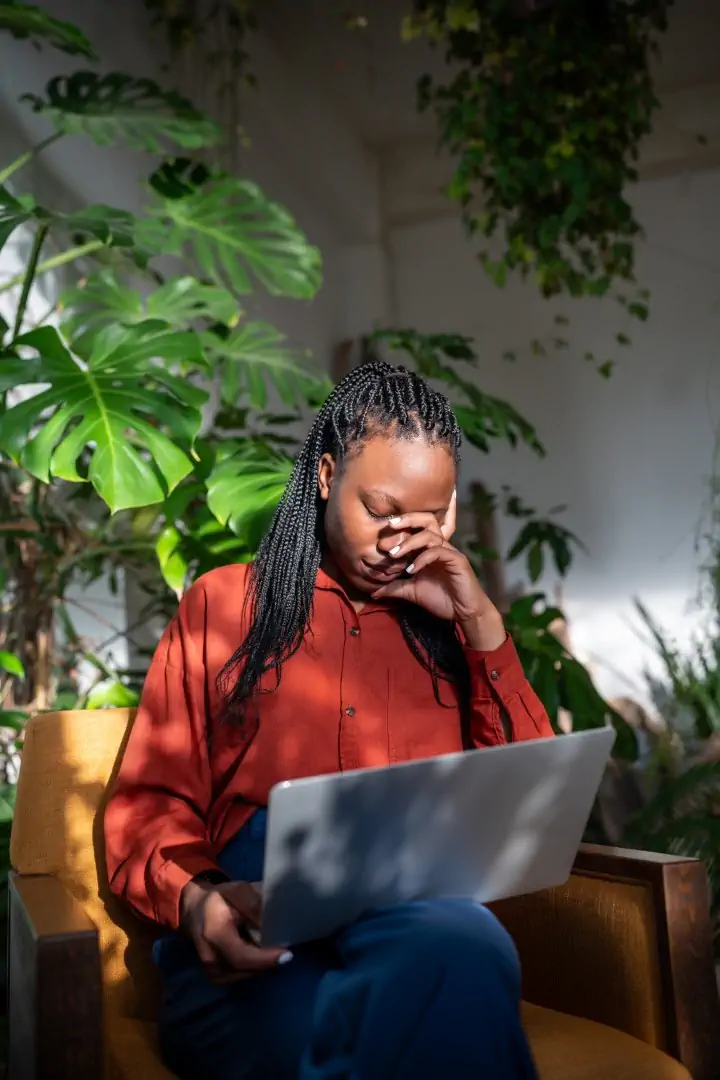
“It was like the world was operating in slow motion.”
Up until last year, I’d never heard of the prodromal phase of schizophrenia. In fact I knew almost nothing of schizophrenia at all, and I definitely didn’t think it would be a label that would apply to me. But twelve months on, here I am.
Although I do have a family history of schizophrenia, I never actually thought I would go on to develop it myself. It just didn’t even enter my head that it could. I went to university, got a good job, was in a long term relationship and had an active social life. I didn’t know who schizophrenia affected, but it wasn’t people like me. Until one day it was.
Despite what people think, schizophrenia rarely begins with psychosis. Or it didn’t for me at least. It began gradually. I’d been completing a masters whilst working and was recovering from covid when I began to feel that something wasn’t right. I couldn’t shake a strange feeling I had- it was like a semi- hangover, where you wake up the morning after drinking and you’re still functional, but you have a cloud hanging over you and feel anxious for no reason.
For me this felt like an overwhelming exhaustion, to the point of being unable to focus, but at the same time feeling really restless and unable to settle- almost like a ‘fizzing’ in my veins. The contradictory sensations were very disorientating and I spent most of my time in bed, but I put this down to having had covid and feeling run down.
Over the next few weeks, this sensation was joined by a feeling of being constantly on edge. Leaving the house filled me with anxiety and felt totally overwhelming. This was unusual for me as I was normally so outgoing and social. My friendships began to wane as contact tailed off because I was either too tired or too anxious to meet with them, and if I did agree to go out, I would panic and bail last minute, which understandably annoyed my friends.
When I did go out I’d feel jumpy and hated being around people, especially crowds, and felt suffocated. During one family outing to a restaurant, I felt so closed in that I couldn’t bear to be in the room anymore and got up and left without a word. My family were furious. I couldn’t get them to understand how I was feeling. They thought I was deliberately being awkward and selfish. I just couldn’t cope in social situations any more. I felt like people were looking at me and judging me or talking about me.
Over time I began to lose interest in everything I once enjoyed. I resigned from my part time job that I’d been doing around university, because I couldn’t cope with the level of social interaction that retail asked of me. Colleagues began to complain that I was too slow and had become distant and unapproachable. Whereas once I’d been always on the go and highly sociable, I was now lethargic and processing even basic information seemed to be much more difficult. Conversation was too much effort. It was like the world was operating in slow motion.
Without work, I spent my days in bed. I didn’t have the energy to go to my university classes, so I didn’t bother going. I fell behind but ignored any attempts that the university made to contact me. As long as I was in my bedroom, I felt safe. The world seemed like a very scary place so I stopped going out. And if I wasn’t going out, I didn’t need to worry about what people thought of me, so I stopped washing my hair and clothes and wore the same leggings and jumper day in, day out.
I couldn’t make decisions, this seemed too difficult, so I ate the same thing day after day too, ordering food online so I didn’t need to leave the house or getting takeaways. I’d try to watch TV but it couldn’t hold my attention for long enough for me to make sense of the story. I had no clue what day it was, what time it was and sometimes even where I was. Time had no meaning and my memory was really poor. Not just day to day forgetting of appointments or responding to correspondence, but also recall of basic information, like forgetting the name of household items. I once went several hours being unable to remember what a fork was.
My housemates stopped talking to me because I couldn’t sustain a conversation for any period of time without losing the thread of what was being spoken about. They also seemed to think that, to counter my depression, being as positive and enthusiastic as possible was the best way to interact with me, which made me want to converse with them even less. I snapped at them after they tried to pressure me to socialise. They thought I was moody and rude and stopped attempting to speak to me. They couldn’t understand what had suddenly changed. But then, neither did I.
My boyfriend at the time also struggled. I was not the girl he met at the start of our relationship. I was someone else entirely. He did his best to support me, but he had no idea what to do since I was adamant it was a phase and I was just depressed. It drove a wedge between us and we split about four months after my symptoms began.
I read somewhere that the average phase for the prodromal phase of schizophrenia is around two years. For me it lasted maybe around six months before I started to develop obvious signs of schizophrenia and entered into the ‘active’ phase. I won’t go too deeply into this as some of the hallucinations and delusions I experience can be quite disturbing and I don’t like to dwell on them.
It started with paranoia, which developed into delusions. These are totally nonsensical, but when I’m in the grip of them nothing can convince me they aren’t real. I have a lot of paranoia about being followed and my delusions tend to be persecutory- that people in power are ‘out to get me’. I also experience auditory and visual hallucinations.
Because I was so isolated as a result of the prodromal phase, my schizophrenia went unnoticed for around nine months. In fact it was only picked up by my family when they became concerned about my ‘zombie-like’ manner and lack of response when I was being spoken to. I also had a very limited emotional range and seemed disinterested in everything. They actually thought at one stage I was on drugs.
Even though at this stage nobody had witnessed my hallucinations or delusions directly, because of my family history and seeing other people go through the same thing, my sister twigged fairly quickly that I was displaying signs of schizophrenia and supported me to get help even though I was very much in denial about my condition.
Frustratingly for my sister, my wider family weren’t as willing to accept my illness. Probably because they had seen the effects of schizophrenia on other family members, they were reluctant to accept I was suffering with it too and there was a lot of talk of “She’s just depressed,” or “It’s just stress.” After all, there is no way of knowing that the prodromal phase of schizophrenia is actually the onset of schizophrenia, because it mimics a number of other conditions and you can’t be certain it definitely is that until schizophrenia enters the active phase. I latched on to this and pushed back against my diagnosis at first, insisting I must have depression. As far as I could tell I was nothing like the people in my family with schizophrenia. I was normal.
With medication and therapy, I have managed to regain control over my symptoms. I have taken time off university, but I’m hopeful I can return next year and I want to work again when I’m ready. Schizophrenia isn’t what I wanted, but it is a part of me and I have come to accept it.