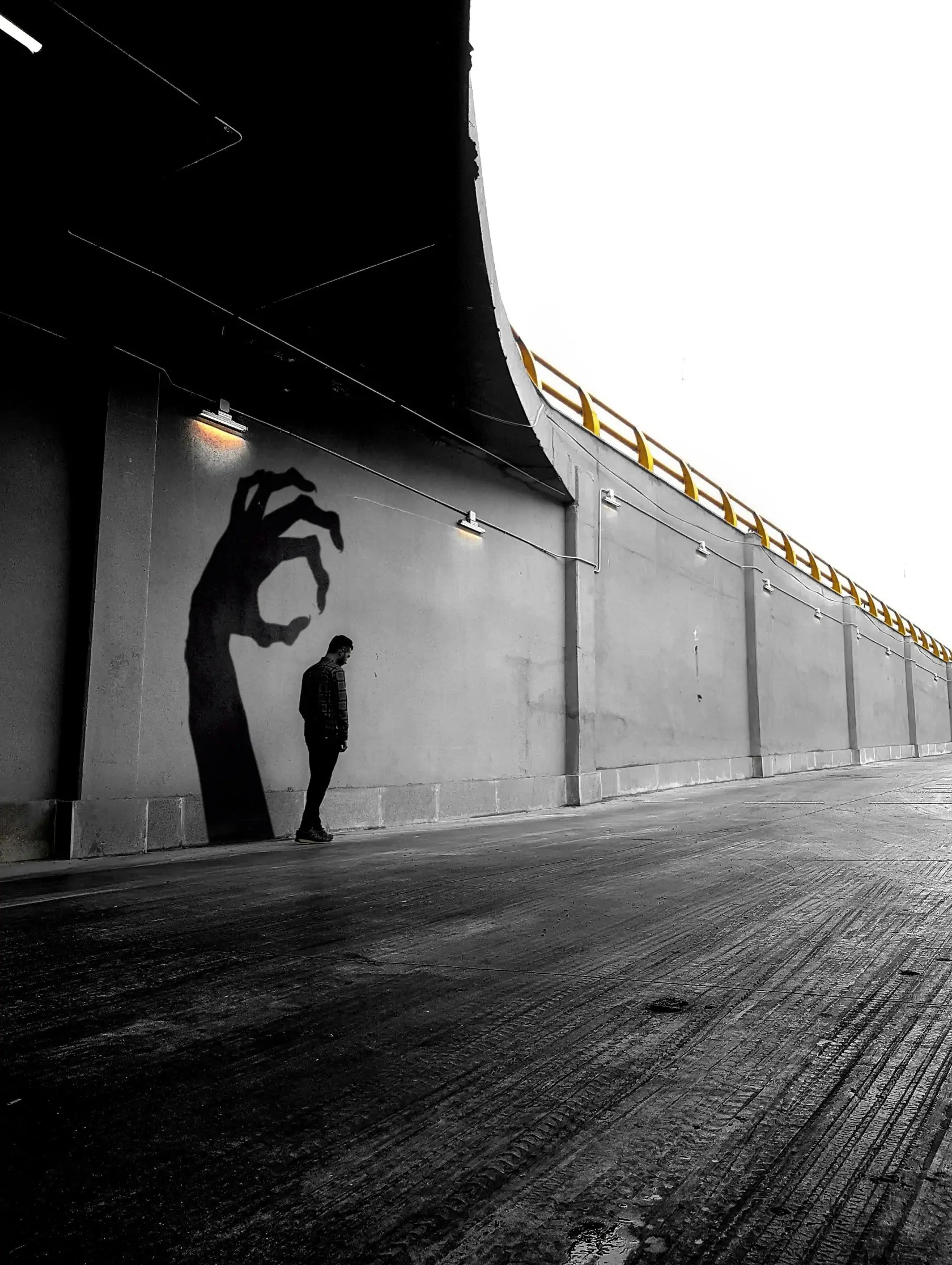
“Low empathy makes it harder for us to connect, so once we do connect, it can be overwhelming.”
I have always naturally loved having an ‘audience’. As a child, I was seen as exceptionally intelligent and gifted, was praised a lot but criticised equally as much. I think it did play a role in subconsciously feeling ‘special’ and rare, and alienated me from easily making connections with my peers.
I’ve had severe health problems as a toddler, and my grandparents (who raised me) always made sure I was overprotected. I later lived with my mother (also high in NPD traits), whose boyfriend abused me emotionally and physically for years, and basically carved into my mindset severe body image issues and disordered eating patterns.
My mother played a passive role in that abuse. She stayed with him for years and seemed more concerned about things such as my fluctuating weight, rather than the impact of his abuse on me. I think that’s when I began fantasizing a lot as a way to escape the trauma, and carried that onto adulthood.
In high school, I was into musical arts, and would go around telling everyone I’d become some Madonna-level sensation and sell out stadiums. As a teenager, I always experienced the underlying contradiction of feeling unworthy and disgusting with the need to do something remarkable to prove my worth and compensate for my developmental years. It also had a certain ‘revenge energy’ to it.
I think my symptoms took a pathological turn at 17-18. I was majoring in theatre performance, and had to quit due to the destructive level of perfectionism I had developed. It suddenly became more and more difficult to open up, because I felt like my struggles were superficial, so I shamed myself for them. I also think my levels of affective empathy have decreased drastically- I was unable to feel as much genuine concern for others as before, and became very caught up in myself.
Currently, my NPD symptoms affect my life in the way that I had to give up my dreams of a public career because of how high my expectations were. I would internally destroy myself for every fault and imperfection. I still do that, but it’s easier to process in solitude or small company. It’s also really hard to open up, and my low affective empathy makes it difficult to trust others or to bond. I always feel ‘incomplete’, that if I can’t ever make my life exactly as wonderful as I want it to be, I don’t really have capacity or will to give to others. No matter how I looked, which job I had, how much praise I got, it all comes back to the feeling of immense dissatisfaction. My brain will always find something to pick apart.
One of the ways NPD affects my relationships is that I constantly compare myself to everyone around, and often feel uncomfortable when I can’t be the ‘best’ (most accomplished, attractive, charming, etc) person in the room. I am aware how this is not only entitled and arrogant, but a completely unrealistic expectation to always be the best at anything, yet the logical realisation contradicts my emotions. I struggle to feel worthy unless I can compare to someone else in a ‘better than’ way.
In romantic relationships, I often get jealous, even on the premise of completely false scenarios. It’s one of the reasons I’m choosing not to date currently, and turn the focus onto my own healing instead.
I do find it hard to genuinely care for most people, and can only trust a few close ones. I try to be my more empathetic self with them.
I think I’ve attuned my cognitive empathy skills smoothly over the years. In my teenage years, I had issues with impulse control, and have worked on a huge part of that. Part of the reason behind it was typical NPD fashion, wanting to create a better self-image and reputation, but I’m certainly able to differentiate right from wrong. I do not go around wanting or scheming to hurt people, and based on what I’ve read or heard in the pwNPD (people with NPD) community, I do not think most pwNPD do either.
I sort of miss the pre-NPD years when I had more affective empathy, because I don’t think I’ll ever be able to regain it back. I’m just lucky to have been taught a strong moral code from the beginning. Empathy really doesn’t seem as necessary to me as morality – kind of the same logic as talent not being as important as discipline.
The most accurate description would be to say my affective empathy isn’t completely lacking, just very impaired. For example, I can get emotional listening to a song I resonate with, but won’t feel bad hearing about a friend’s problems. That certainly doesn’t mean I will enjoy their suffering. I will help them and lend an ear, I just won’t sense or experience an emotion, unless I strongly relate. This is what I wish people understood about empathy (in some cases, however, the emotion might ‘catch up’ with me later).
I’m self-diagnosed at the moment (took months of extremely painful self-reflection), but the therapist I attended in my earlier years told me once I was at risk for developing NPD (it was not diagnosed because of my age then). And my ex-girlfriend, who had a vital part in me becoming self-aware, majored in clinical psychology. So that’s still two professionals nonetheless. I’m trying to get help, but it’s a bit of a dangerous slope.
Where I live, an NPD diagnosis on paper would mean a freak and reject, and seen on every job application. I want to make sure I’m more stable before I get a professional diagnosis. It’s kind of contradictory: I feel like it should be the other way around, therapy encouraging patients to find more stability within their lives.
I wish people were aware of many things, but primarily that almost no narcissist ever ‘schemes’ to abuse someone or gets off on destroying lives. It’s like pop-psychology created a parallel reality of misinformation which is dangerously out of tune, unprofessional, and even contradicting.
People claim pwNPD lack emotion, but forget that Cluster B is all about emotional regulation. Many psychological terms that are considered normal for most people are demonised under the lens of NPD, such as projecting- look up the definition outside of NPD context and it has no abusive connotation whatsoever. Narcissists project, everyone projects. The same with ‘love bombing’, a term invented out of thin air. Low empathy makes it harder for us to connect, so once we do connect, it can be overwhelming.
While it’s true that pwNPD can be more prone towards impulsive behaviors (which isn’t exclusive to symptoms of NPD alone), it’s mostly secondhand smoke from how we suffer beneath, even if we want to present a perfect facade to the world. Anyone can be abusive or hurtful, and I don’t encourage people to excuse toxic behaviors in anyone, PDs or not. I just think the misinformation concerning NPD in particular is overbearing, and doing whatever I can to confront it helps those of us who have to live with it.