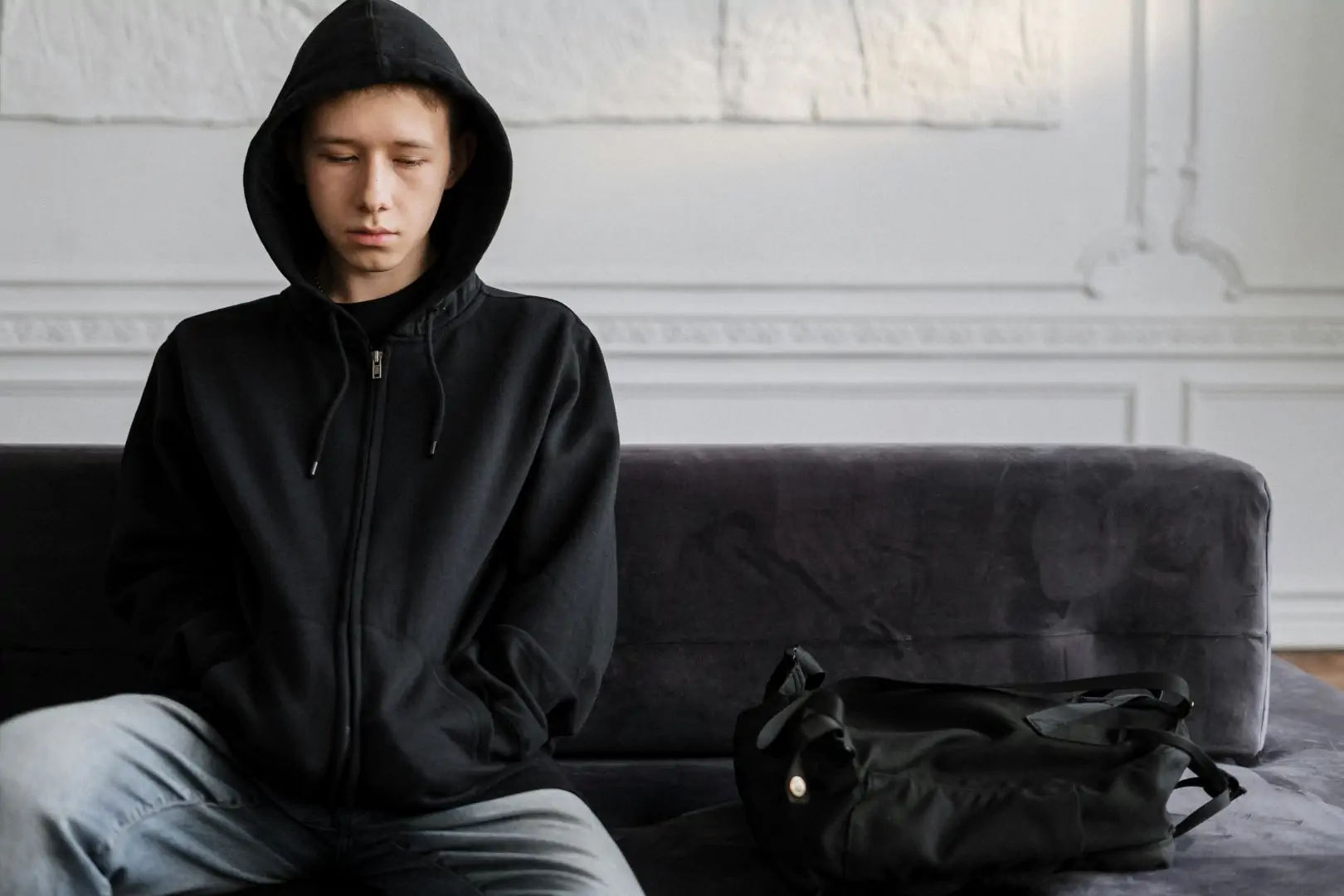
“I am terrified of finding out it’s something else and being accused of faking it. “
I’ve been hearing voices for as long as I can remember. I was a very imaginative child, and never had a shortage of ‘invisible’ friends. Sure, some seemed to stick around more than the others, but I didn’t give that much thought.
As I got older I continued to have these imaginary friends. They would comment on my everyday life, sometimes to the point of annoyance. We shared secrets and they consoled me during emotional crises. They helped me process thoughts and feelings that I wasn’t allowed to in the real world. I knew I was a little old to still have imaginary friends, and it became a closely guarded secret.
My ‘friends’ never really went away. Sometimes there would be shifts and someone new would come along or someone old would disappear. I didn’t really have control over this, although there was some outside influence at times. Once I reached my mid-thirties I really began to wonder if there was something wrong with me. I began researching maladaptive daydreaming. I had never told any therapist about my ‘friends’, but I trusted the one I had at the time, and finally decided to tell her my concerns. That evening all hell broke loose.
I was in the middle of cooking dinner, when suddenly a brand new voice that I had never heard began shouting. “No, no. We are not doing this. No need to look any further. We are not going down this road!” Suddenly an argument broke out in my head. I lost complete control of my body. While this had happened to me before (something I figured was just another weird quirk of mine), it had never been this dramatic. The experience sent me running to my therapist.
After a discussion with her and a consultation with my psychiatrist, I was referred to a trauma specialist. After some deep diving into my symptoms, and meeting an ‘imaginary friend’ who turned out to be an alter (a dissociated identity) he diagnosed me with Dissociative Identity Disorder.
I had been told this was a possibility. It was either DID or schizophrenia. I knew it wasn’t schizophrenia, but the thought that I might have DID had never occurred to me before. I thought I knew quite a bit after reading about it and watching several YouTube channels. I found the disorder fascinating, and thought it must be really hard for people to live that way, but never considered I was living that way. And considering I’ve been called a psychiatric hypochondriac, that’s saying something.

My psychiatrist offered to prescribe a medication that might quiet the voices. I panicked. Under no circumstances did I want to be alone in my brain. That should have been a pretty good indicator.
Full disclosure: My experience with DID is not nearly as disabling as others’. I’ve never woken up in a strange place with no recollection of how I got there. I may not remember the actual journey, but I will know how the journey was made. My amnesia is more like a fuzzy, gray image rather than a full blackout.
I am still (mostly) able to function at work and as a mother. My system (collection of alters), is in complete agreement about the main areas of life that must be protected. As the host of the system (person who is in charge most often), I can go days without switching. These ‘less severe symptoms’ do make me question if my diagnosis is correct. My therapist told me that no two people with DID are the same, and that despite what the experts say, we don’t really know enough about the disorder. I’m still not entirely convinced. Denial is a river in Egypt, and I’m drowning in it.
This diagnosis has been very difficult to accept. For one thing, I can’t think of anything in my life that was traumatic enough to cause such a serious disorder. Also, because my symptoms aren’t as severe as those that I’ve seen, I question whether my symptoms are real. Am I faking this disorder? Did my overactive imagination watch one too many DID channels? Is this my maladaptive daydreaming gone wild? Or is this just a dramatic case of BPD dissociation? I am terrified of finding out it’s something else and being accused of faking it.
I’ve heard that denial is a serious issue with DID. Most systems will go through some level of denial throughout their lives. I know that my denial is hindering my system’s ability to communicate, and eventually heal. I don’t know why it’s so hard for me to accept. It feels like there’s a block in my head that I can’t get past. I know DID explains some of the things in my life that I never had answers for – like why I am missing huge chunks of my memory. Close friends have told me they witness the switches between alters and can tell when it’s someone other than me. I still feel like I am faking it all.
My brain does this weird thing where I’ll be talking to one (or more) of the others and the communication is fine. It feels like it did back in the day, before I knew it was DID. Then I will suddenly realize what is happening and communication gets cut off. Then I might go days before hearing someone. The longer the time passes that my head is silent, the more I convince myself I had been faking it. It’s a terrible catch 22 that I can’t figure out how to get around.
There is definitely something to be said for how DID is being treated these days. It seems to be that either people think it is a completely made up illness that doesn’t exist; or they consider it extremely interesting and view it as some sort of spectacle. Neither view is particularly helpful. There are also people who are pretending to have DID on social media. Even worse, there are people who are trying to give themselves DID. As someone who has been diagnosed, in a moment of nondenial, I can confidently say DID isn’t some kind of hobby or aesthetic. It’s an illness. And it sucks.
DID is an incredible, creative method that the brain uses to protect a child from something so awful that they cannot mentally or emotionally comprehend it. In order for the child to be able to continue living their life, the brain takes that awfulness and sections it away from the conscious memory. If this happens often enough, the section becomes permanently separated and functions with its own consciousness. This means that the person can live their entire life and never remember the trauma.
And that’s really the key: trauma. Saying you want to have DID is akin to saying you want to have trauma. Faking DID is mocking the trauma that survivors have been through. It’s not a fun disorder. It is memory gaps and lost items. It is an empty bank account and not knowing where the money went. It is having no definitive opinion on anything because there isn’t total agreement within the system. It is buying supplies for a hobby, and then having them sit for months because that alter doesn’t front long enough to enjoy them. It is your body doing things without permission. It is being an easy victim of gaslighting because you can’t remember the truth.
Maybe that’s why I have such a hard time accepting this. There are other, fully conscious, parts of me that are also a part of this life. They have needs and desires that don’t necessarily fit with my life plan. How do I allow these parts to have what they want while still living my own life? To accept the diagnosis means to recognize that there are parts of me that I have no control over.
I never know when they are going to take over and do something I wish they wouldn’t. Am I going to end up with even more toys and stuffed animals because the five year old threw something in the cart? Am I going to buy clothes that I would never wear because a more confident part went online shopping? Am I going to disclose something I wanted to keep to myself because a protector decided it was better to discuss it? Am I going to alienate a friend because the angry, sarcastic part doesn’t care what other people think?
DID can be very isolating and lonely. I’m afraid that the few friends I talk to about it get sick of hearing it from me. They don’t understand it, and I wonder if it makes them uncomfortable. I also think that as hard as it is to accept for me, it’s got to be even harder for them, right? How do I maintain relationships when I know there’s a five year old who desperately wants to talk to them? Or when they call or message, the nonsocial alter who is fronting refuses to respond? Or the realization that the one who gives good advice isn’t actually me?
The times my alters have revealed themselves while speaking to others, there’s this sense of trepidation from the other person. It’s discouraging and makes it less likely for them to try again. They either don’t come out again, or when they do, they do their best to pretend they’re me.
And that just reinforces the denial.
What would it take for me to accept this diagnosis? More public awareness. More indications that it’s okay for my other parts to exist. More education and acceptance of what DID really is. More understanding for the less desirable symptoms: the forgetfulness; the dysfunction on bad dissociation days; the moments of identity confusion when, quite frankly, I can’t tell you who I am. I do want to accept whatever is needed to help me function as a system, rather than a dissociated part who is unaware that she feels incomplete because she’s ignorant of actual pieces of herself.
I know denial is a strong river. Someday I hope to be stronger.