“I have good and bad days and recovery isn’t linear.”
When you go to university, the thing that nobody prepares you for is what happens when you leave. Or more precisely, what happens when you leave and you can’t get a job. All through sixth form and my time studying at university, I’d been told that having a degree would make me stand out in a saturated job market and that once you finished, you’d get onto a graduate scheme and have the career you’d been working towards.
I studied journalism and graduated in 2010. Throughout my degree, I’d done all the things you’re supposed to do to make you ‘stand out’- I’d written for student publications, been an editor on the student newspaper and even managed to write some pieces for the mainstream media. I’d even worked for free on a regional publication as part of a sandwich year, which I’d done because I was unable to afford to do unpaid internships during the summer as many of my fellow students did due to my financial situation and not living near London.
As my final year approached, I wasn’t too worried. I had so much experience that I was sure I would be able to find a job in the field I loved. I started early, applying for graduate schemes before Christmas on the big national newspapers. I was in direct competition with my coursemates but I wasn’t too concerned, since my CV was brimming with glowing references and I had a sizeable portfolio.
After Christmas, people on my course began to be invited to interviews for graduate jobs on schemes that I’d applied for. One by one, they secured jobs as I was still patiently waiting for the phone to ring. Sometimes I received a polite rejection letter, but more often than not, I didn’t.
I was undeterred, and carried on undertaking as much unpaid freelance work as I could to boost my portfolio and build contacts. As Easter approached, I’d abandoned my aspirations for a graduate scheme and spent all my time applying for posts on regional newspapers, as well as smaller websites and publications. And despite numerous people looking over my applications and reassuring me everything was fine, still the phone remained silent.
As the end of my degree neared, I was one of only a handful of students who hadn’t secured a job. I couldn’t understand it. I had grafted for free nonstop during my three years at university to gain exposure and experience, and it had amounted to nothing.
I was told that a major hindrance was that I hadn’t done any unpaid internships at major publications. But the reason why I couldn’t was because I didn’t come from money and couldn’t afford to work for free at a magazine for six weeks. I was from a very low income family who simply couldn’t support me to do that, and my summers were spent working in retail to earn enough money to keep myself afloat financially. I couldn’t compete with those who were fortunate enough to have done so.
The day I graduated was one of the saddest of my life. The other students on my course were excitedly chatting about their new jobs and every time I was asked, “Have you found anything yet?” it was like a dagger to the heart. I only lasted ten minutes after the ceremony before I asked my parents to drive me home as I tried not to cry. They tried to reassure me I’d find something soon.
Because I had no job, I had no other option than to move back in with my parents. I told myself it would be temporary until I found a job in the media, so continued with my job search and filled my time with more writing.
But things had changed. I desperately needed money now with a student overdraft to pay off and no permanent employment. Every time I pitched a story idea, it was assumed I would write it for free. If I tried to negotiate a fee, I was treated as if I was being totally unreasonable for expecting payment, or told, “This will look great on your CV!” In fact I lost count of how many times I heard this. But I ended up doing it for free, because I was terrified of dropping off the radar as a writer and clung to the vague promises of commissioning editors that if anything ever came up, I’d be first in line for consideration of a staff writer job.
After a month I landed a job. But it wasn’t in the media. I’d applied for everything going as I now didn’t have the luxury of being choosy as I needed an income to survive. I’d applied for retail jobs and been offered a part time contract. It wasn’t ideal but I tried to look on the bright side- part time meant that I could continue with writing. By this point I was part-time editing a feature section of a website to build my CV. It was unpaid, but it seemed worth it to have the experience.
Shortly after this, one of the publications I’d worked for offered me a dream opportunity as a Features Editor of their independent magazine. I was over the moon- this was what I’d been working towards, and an Editor role was my ultimate career aspiration. It was only as I was about to hang up that the magazine editor slipped in as an almost-afterthought that actually, as an independent magazine with a small circulation, they couldn’t afford to pay me. They would however expect me to do all the tasks associated with an Editor role.
I hesitated. For a role as big as this, I would have expected even a small sum as a token gesture. I was on minimum wage in my retail job and struggling- there was no way I could afford to move out on my salary, and my dream was still to move to London to pursue my career. This wasn’t going to happen in my current situation. I had no money spare to save- even living at home with my parents- on a part time contract.
But this was a leading independent magazine that seemed to be growing and had a large cult following. It could lead to bigger and better things. So I accepted.
Fairly soon I was struggling to balance my retail role with the Editor role. Commissioning, editing and formatting stories took up all my time, and that’s without the number of stories I was expected to produce myself. Many writers- who weren’t getting paid either- forgot or just didn’t meet deadlines as they prioritised paid work, which meant the pressure came back on me from the magazine.
Not living in London, where the magazine was based, meant that I missed out on all of the perks of the job. I’d see the magazine’s social media packed full of pictures of the rest of the team at parties, product launches, press events and staff social events while I was holed up in my room on my laptop into the early hours of the morning and feel upset. I also suspected they were being paid a salary, since they all appeared to work full time in their roles according to their profiles on professional networking sites.
A few times the magazine sent me to cover events or do interviews in London. They asked me to keep hold of receipts in order to reimburse me, but it was expected that I would pay for everything myself first, which was often a stretch for me. Sometimes the money took weeks to be paid back to me. Often it wasn’t paid at all.
The final straw was when I was asked to cover an event over several days and stay in a hotel which they booked for me and assured me was paid for. When I came to check out, the bill hadn’t been settled and I had to pay it myself. I ended up crying on the phone to my mum because it left me no money to afford the train back to where I live, so she had to transfer me the cash to be able to come home. Once I got back, she gently suggested my dreams of being a writer may need to go on the back burner. So I resigned.
I fell into a deep depression. I felt like a failure, and this was only reinforced by the fact that many people who had studied on my degree were now successful journalists and broadcasters. Every time I opened a magazine or newspaper, or watched the credits on a news programme, I would see the names of people I knew as a reminder of how successful I hadn’t been.
I didn’t understand it. I never felt entitled to success, but I’d worked so hard and I’d always been taught that hard work pays off. So why hadn’t it? I’d done everything right.
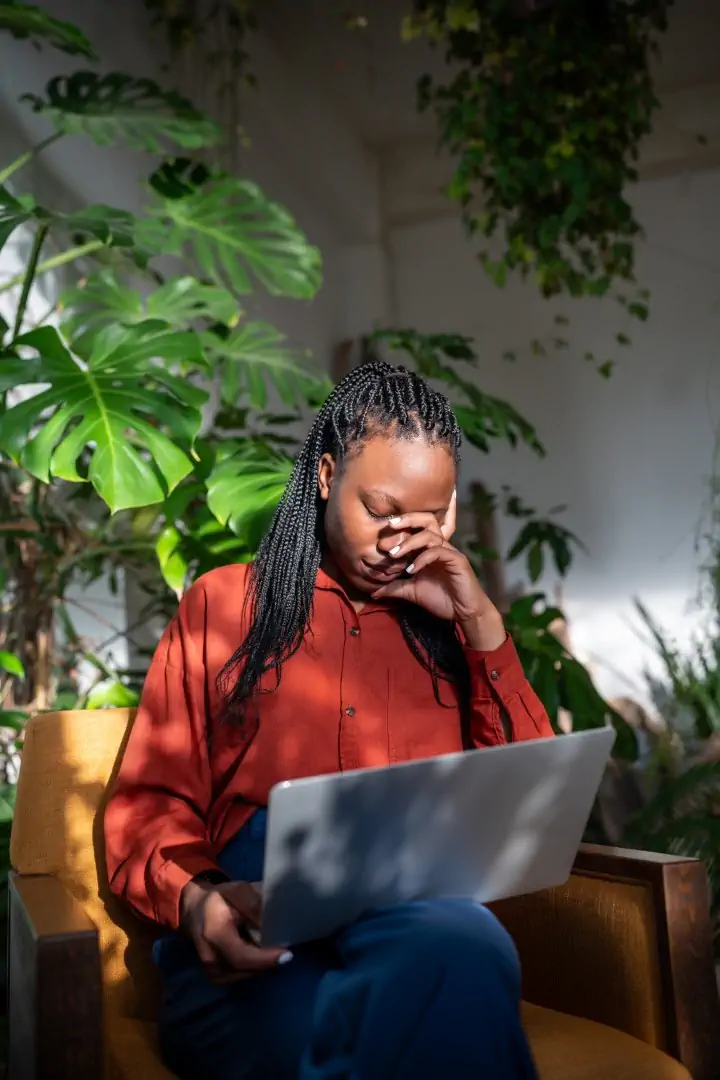
I stopped taking on extra shifts at work and spent my days lying in bed, not wanting to get up and face the world. I couldn’t look at any form of media as it felt like a kick in the stomach. I stopped job hunting because the thought of more rejection killed me. I didn’t go out. Not that that really mattered, since I’d dedicated my life to writing and had no time for a social life, so all my friends had long since fallen by the wayside. I cried all the time. My family were sympathetic, but they didn’t know what to do with me. I’d never felt despair on this level before.
Eventually they dragged me to the doctor who diagnosed me with depression, and I was prescribed a high dose of Fluoxetine and referred for counselling. It helped, but I still struggled with intense feelings of worthlessness and inadequacy.
After a few months I felt emotionally stable enough to begin to apply for media jobs again. I sent out over 350 job applications in just under a year and had six interviews. None were successful, and this set me back once again in my recovery and I relapsed quite badly, resulting in a suicide attempt. I knew I couldn’t bear any more rejection and decided that was it for me in terms of pursuing my dream. It was over.
The hardest thing for me to accept has been that my inability to secure a job in the sector I want to work in isn’t a reflection on me. Media is a highly competitive industry. I don’t think I can put myself through all that again- pursuing my dream career has shredded my mental health and my confidence. It’s wrong that people are exploited too- in the media, it seems commonplace and socially acceptable in a way it isn’t in other industries.
I’m still in retail, although I hope it won’t be forever. I have good and bad days and recovery isn’t linear. I still have those days when I sit and dwell on the career I wish I’d had. I’ve cut off anyone I used to work with for free and blocked most of my old coursemates on social media. I struggle a lot with seeing other people’s success. I gave so much to try and carve out a career in journalism and got nothing back, but the one positive I’ve taken from it is that I know when I do get a job that matches my aspirations, I’ll have the resilience and strength to deal with it.